
Retracted Science paper highlights problems with universities and journals
The journal Science, considered to be one of the world’s leading academic journals, has this week retracted a widely reported study on the effects of microplastics on fish, in the wake of a damning statement by the Expert Group on Dishonesty in Research of Sweden’s Central Ethical Review Board. Retraction Watch reports that this comes after months of questions about the validity of the study data.
The Expert Group concluded that the study authors “have been guilty of scientific dishonesty”, and levels strong criticism at the journal Science for accepting the paper, and at Uppsala University for it’s poor investigation of the matter, stating that:
According to the Expert Group’s assessment, it is remarkable that the article, given [its] deficiencies, was accepted by the journal Science.
and,
…the Expert Group finds it remarkable that Uppsala University, in its preliminary investigation of 31 August 2016, found no support for the presence of dishonesty in the research carried out by Peter Eklöv and Oona Lönnstedt.
Scientific dishonesty such as this acts to further undermine already eroded public confidence in science, giving a free kick to the legions of climate change deniers, evolution deniers, and anti-vaccination campaigners.
There will always be dishonest players in any profession, so institutions need to be set up to be able to readily detect dishonesty and to swiftly and firmly act on it when it is detected. The findings of the Expert Group in regard to this retracted paper show that both universities and journals are falling short of their responsibilities in this regard.
The message to universities and journals is clear: lift your game!
Article source: Retraction Watch.
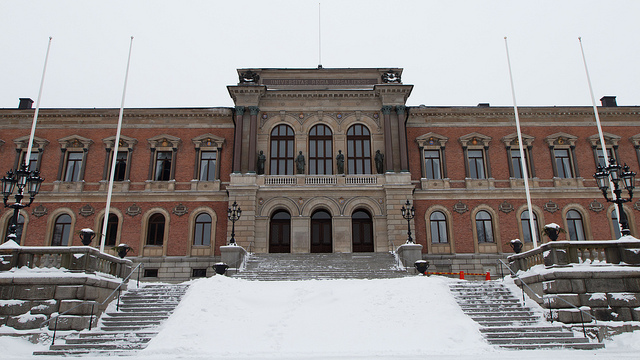
Header image source: Old University of Uppsala by Vomir-en-costard is licensed by CC BY-SA 2.0.
Also published on Medium.




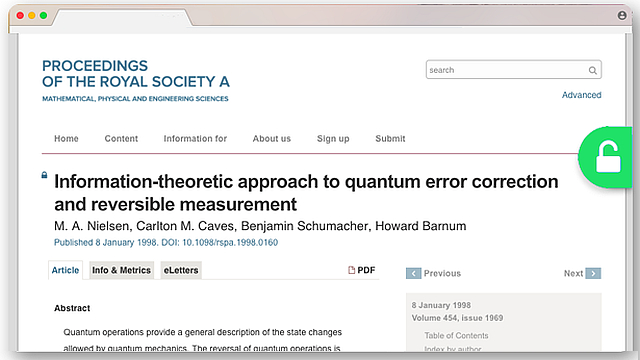


I find it rather odd that the linked Science page shows that the paper has been retracted, but the full text is still available and has all the appearance of a published paper. Surely if it should never have been published then it should now be removed.
The author claims that “Scientific dishonesty in science…. is giving a free kick to the legions of climate change deniers..”.
this is a dangerous accusation. There is a large number of prominent scientists who diasgree with SOME aspects of the “accepted” theory of global warming. Does the author imply that ALL of them are dishonest ?.
Science is based on agreement, disagreement, discussions, arguments etc. This is important to the future of science.
Galileo was also a “denier”, wasn’t he ??.
What does the author think about the following ?
http://observer.com/2017/02/noaa-fake-global-warming-data-paris-agreement-climate-change/
Many thanks Eli for your comments. In regard to the issues you raise:
1. My full statement in the article is “Scientific dishonesty such as this acts to further undermine already eroded public confidence in science, giving a free kick to the legions of climate change deniers, evolution deniers, and anti-vaccination campaigners.” This statement does not equate to saying that scientists who disagree with “SOME aspects of the “accepted” theory of global warming” are dishonest.
2. No, Galileo wasn’t a denier. Quite the opposite actually: he pioneered the evidence-based scientific method followed by modern scientists (and by RealKM Magazine). See https://skepticalscience.com/climate-skeptics-are-like-galileo.htm
3. In regard to the Observer article you linked, the claim made in the article that NOAA falsified data has been debunked by FactCheck.org, see http://www.factcheck.org/2017/02/no-data-manipulation-at-noaa/