multiple knowledges
-
KM & SDGs campaign

Changing the International Discourse on Knowledge and Knowledge Societies for Sustainable Development: From ‘Transforming Our World’ to the ‘Pact for the Future’
By Sarah Cummings, Bruce Boyes, Denise Senmartin, Fitsum T. Habtemariam, Gladys Kemboi, Rocio Sanz, Andreas Brandner, & Chris Zielinski.
-
KM & SDGs campaign

Why a multiple knowledges approach is essential to the success of the UN Pact for the Future and Sustainable Development Goals (SDGs)
Stakeholders have an essential role in making complexity evident.
-
Case studies in complexity

Case studies in complexity (part 8): Pauline Hanson and One Nation
Reform is needed across governments and the public sector to ensure meaningful and ongoing stakeholder and community knowledge engagement.
-
Stakeholder and community engagement

Exploring New Frontiers in Citizen Participation in the Policy Cycle
Meaningful citizen participation in policymaking is now critical.
-
KM & SDGs campaign

Summary report of stakeholder inputs to UN 2027 GSDR reflects RealKM submission
Our landmark KM & SDGs campaign journal editorial is now a scientific reference for the 2027 Global Sustainable Development Report…
-
KM & SDGs campaign

RealKM submission to the 2027 Global Sustainable Development Report (GSDR)
The 2027 GSDR will inform the follow-up and review of the 2030 Agenda for Sustainable Development and 17 Sustainable Development…
-
Stakeholder and community engagement
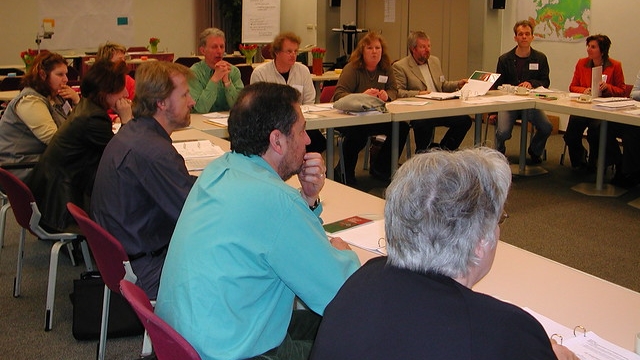
Mobilizing the Arnstein Gap for better planning
What is the Arnstein Gap? How can the Arnstein Gap usefully inform future citizen or stakeholder engagement?
-
Tools & methods

Participatory scenario planning
The point of scenario planning is not to predict the future, but to explore its uncertainties. Participatory scenario planning extends…
-
Artificial intelligence

Integrating LLMs with local knowledge bases assists sustainability, but neglects tacit knowledge and complexity
LLM-LKB integration has value, but misses tacit knowledge, which is important to achieving sustainability in the face of complex realities.
-
Evidence-based knowledge management

How to encourage evidence-based decision making
EBDM requires using multiple sources that have been carefully vetted, and, importantly, involves connecting with people.
